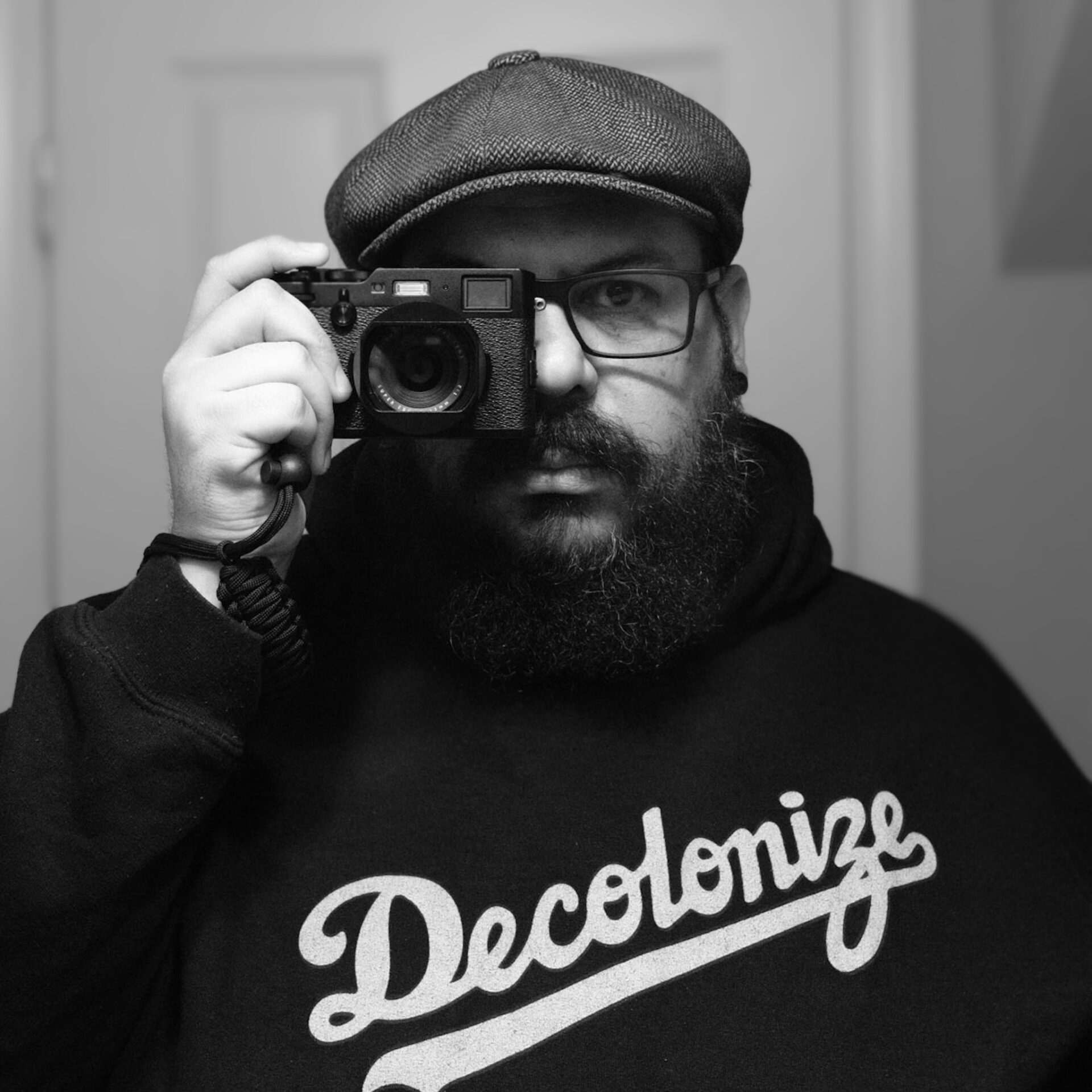
Look Mom, I got to interview Dr. Cornel West!

Iconocast Episode 15: Cornel West

In this episode, co-hosts Eliacin and Mark speak with one of America’s most celebrated and controversial public intellectuals: Dr. Cornel West.Dr. West is an African American philosopher, author, critic, actor, and civil rights activist. West currently serves as the Class of 1943 University Professor at Princeton University, where he teaches in the Center for African American Studies and in the department of Religion. He is the author of a number of books including: Prophesy Deliverance! An Africo-American Revolutionary Christianity, Race Matters, The Future of Race, Democracy Matters, and Hope on a Tightrope.

In the interview, we talk to Dr. West about being disinvited as a keynote to the CCDA conference, his relationship with Barack Obama, the rarity of social movements, the power of love, the difference between charity and justice, and much, much more.

Special thanks to Jarrod McKenna…who stayed up all night in Perth, Australia to be a part of this interview but (due to upsetting technical difficulties with Skype) was unable to participate (listen to the end of the podcast–at around 56:45) to find out more…

Listen here

USA crossed our borders first

Actually the first Hispanics to become part of this country (USA) did not do so by migration, but were rather engulfed by the United States in its process of expansion- sometimes by purchase, sometimes by military conquest, and sometimes by single annexation of territories no one was strong enough to defend… Thus in the beginning it was not Hispanics who migrated to this nation, but this nation that migrated to Hispanic lands.

Justo González, Manana: Christian Theology from a Hispanic Perspective


Feb. 12 – Red Hand Day: A worldwide initiative to stop the use of Child Soldiers


Children are involved in numerous armed conflicts all over the world. Recent examples are Afghanistan, Angola, Burundi, Colombia, the Democratic Republic of the Congo (DRC), Côte d’Ivoire, Guinea, India, Iraq, Israel and the Occupied Palestinian Territories, Indonesia, Liberia, Myanmar, Nepal, Philippines, Russian Federation, Rwanda, Sri Lanka, Somalia, Sudan and Uganda.

Armed groups and government forces continue to recruit and use children. Many are forced to join up and cannot leave once they are in the ranks. While the majority of child-soldiers are aged between 15 and 18, in some conflicts children as young as nine have been recruited. Others are growing up in war zones and have few possibilities to survive other than by joining an armed group “voluntarily”..

The suffering of the child soldiers


Feb-12: Red Hand Day in Geneva

All child soldiers suffer a great deal when in the ranks of an armed force. Conditions are usually harsh and discipline maintained by brutal punishment. Life is dangerous and characterized by hard work, lack of food, drinking water and sanitation, no access to health services and constant fears of being trapped in an ambush, landmines or gunfire. Many children die in this inhuman environment; others survive crippled, blinded or traumatized for the rest of their lives. Boys are not the only ones at risk. Approximately one third are girls. They carry out the same tasks as boys but are frequently subjected to sexual violence and forced to be the “wives” of commanders or to serve as sexual slaves. As a consequence they are often infected with HIV/AIDS or other sexually transmitted diseases. Many become pregnant. In some cases they are stigmatized and have to live with their babies under war conditions.

The story is not over once these young people return home. Some discover their families have been killed or their homes destroyed. There may be little chance of finding a job or returning to school and some turn to crime or prostitution. Many must deal with physical disabilities. Communities may find it difficult to accept these former soldiers, and the youth themselves may reject community rules or traditions. Communities, families and former child soldiers need financial support and assistance to re-establish connections and create opportunities to rebuild their lives.

To tackle this misery and organized misuse of children international legal standards have been put in place to protect children. The Optional Protocol to the Convention of the Rights of the Child on the involvement of children in armed conflict was adopted by the General Assembly of the United Nations in May 2000. It prohibits the direct participation of under 18s in hostilities and sets 18 as the minimum age for recruitment by armed groups and for compulsory recruitment by governments. It entered into force on 12 February 2002, Since then more than 100 states have ratified this standard-setting treaty

To commemorate this important step and to guarantee all children’s right to be protected from armed conflict, the International Coalition to Stop the Use of Child Soldiers has created Red Hand Day.

Read more…


Remembering Dom Hélder Camara


“I love hearing the apostles ask: ‘Lord, teach us how to pray.’ we may sometimes think we’ve learnt how to pray already. All the same, knowing the Lord’s Prayer off by heart isn’t enough. The important thing is to learn to live the prayer the Lord has taught us.

“Beginning with ‘Our Father.’ Are we really convinced that God is the Father of us all? Not merely ‘my’ Father, but ‘our’ Father. If he is ‘ours’, then we are all brother and sisters. People with the same father are brothers and sisters.

“It is very easy at mass to say, ‘Peace be with you’ to the person standing next to you; but after that we each go home and the other person is forgotten. If the other people were really our brothers and sisters and we knew they were ill, in misery, perhaps even dying of hunger, we would do all we possibly could for them, and more…

“Then again, when we say, ‘Thy will be done.’ It’s easy enough to accept God’s will when it coincides with our own. We know exactly how to ask the Lord for things, but the Lord had better look out and agree with what we want. And on no account should the Lord think or want anything different.

“And yet, very often, what we ask for isn’t what is good for us. We are like little children, as far as the Lord is concerned. A father knows better than to give his child the knife it wants to play with, or to let it go down the stairs on its own.

“You know the prayer I love to say? ‘Lord, may your grace help me to want what you want, to prefer what you prefer…’ Want what you want… Prefer what you prefer… For, honestly, what do we know? We ought to do everything as though all depended on us, at the same time putting ourselves into the Lord’s hands, knowing that our own strength lies in offering him our weaknesses.
“We really need to learn to live Christ’s prayer…..”

Dom Hélder Camara, Archbishop of Recife and Olinda, Brazil, died on August 27, 1999, at 90 years of age.  The twelfth of 13 children, son of a bookkeeper and a grade school teacher, he became one of the most loved and, at the same time, most opposed persons of Brazil in this century.  With his death, his image gains new stature.

Dom Helder, as he was known, was internationally acknowledged as “a man of God and a defender of the poor.”  In the 60’s and the 70’s, he was with Pele, the soccer player, the Brazilian most known throughout the world.

That small frail man, to whom it applied the sobriquet of “the red bishop,” was a source of embarrassment for the military regime.  Under the pretext of national and personal security, Dom Helder was for many years subjected to endless interrogations and threats.  The personal protection he refused saying, “I don’t need you gentlemen, I have my own security guards.  They are the Father, the Son, and the Holy Spirit.”  As to his supposed threat to the national security, endlessly he would declare that he was no communist, no Marxist, and no subversive.  “I feed the poor, I’m called a saint.  I ask why the poor have no food, I’m called a communist.”
He raised his voice when many held their silence.  So he was silenced.  From 1970 and for 13 years hence, in a miserly attitude which is habitual to dictators, the government banned him from any public spaking and forbade even the publication of his name in any media.  Exiled in his own country.

Read more…